
Woodworking Tools Beginners Learn to Use Safely
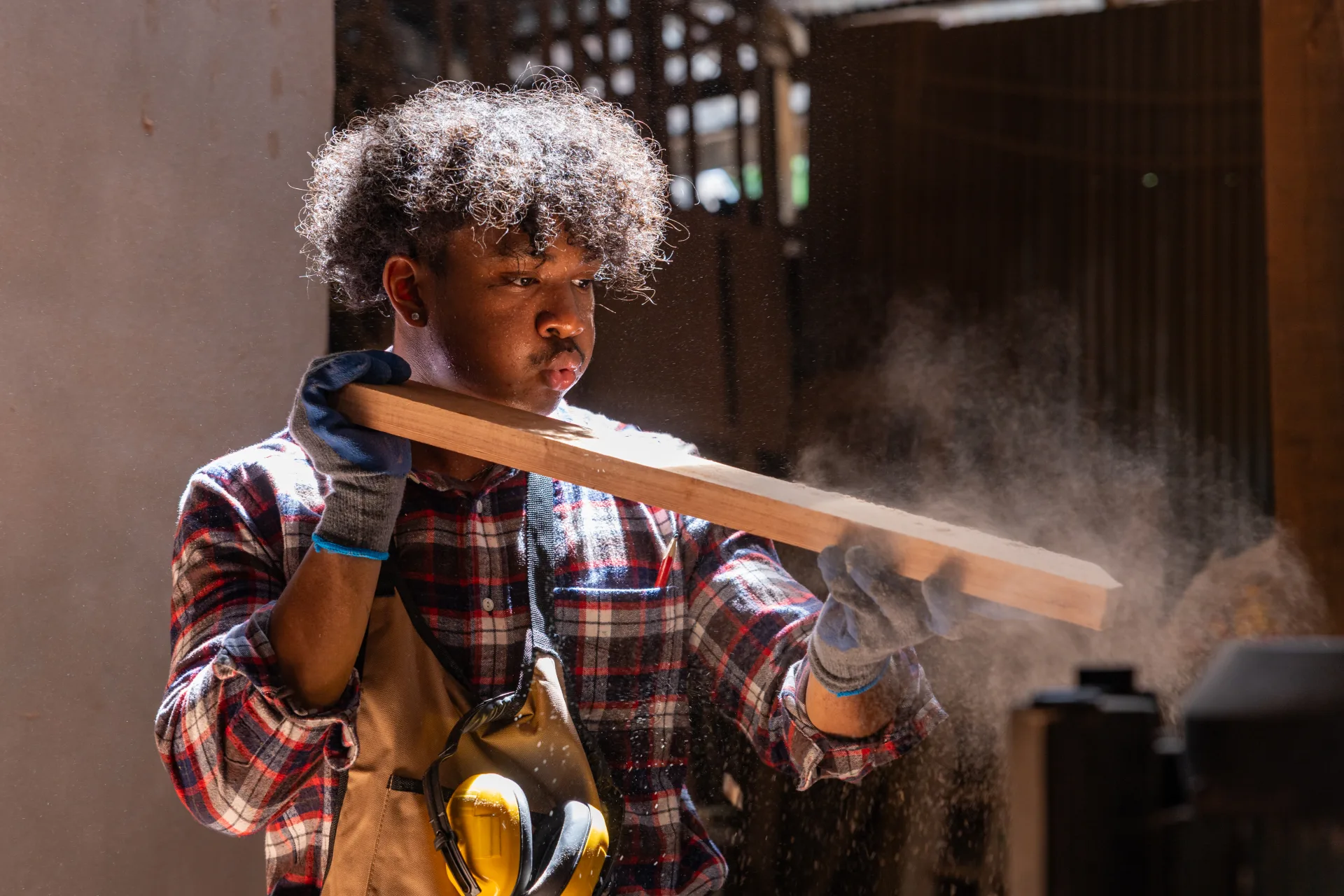
The most useful beginner woodworking toolkit is not the biggest one. It is the set of tools you understand well enough to choose, set up and control. A course should therefore begin with accuracy and safe habits before introducing speed or more powerful equipment.
The tools below represent the stages of a project: planning, holding, shaping, joining and finishing. Specific brands and machines vary between workshops, but the underlying skills transfer from a simple box or bench to shelves, planters, tables and furniture repairs.
1. Tape measure, square and marking tools
Accurate woodworking begins before the cut. Beginners learn to read a tape consistently, establish a reference edge, use a square to carry a line across the timber and mark the waste side clearly. A sharp pencil or marking knife is a precision tool when used deliberately.
- Measure from one reference point rather than accumulating small errors.
- Check whether the timber edge is straight enough to use as a reference.
- Mark the component name and orientation before pieces become difficult to distinguish.
- Confirm the final dimension and the cutting side of the line before starting the tool.
2. Clamps and a stable work surface
A clamp is not an optional extra that appears only during glue-up. It holds material so measuring, drilling, cutting and assembly can happen without the workpiece moving unpredictably. Beginners learn to support the timber, position clamps away from the tool path and apply enough pressure without distorting the parts.
3. Hand saws and guided cutting
Hand saws teach body position, starting a cut and following a line at a pace where every movement is visible. In a workshop, beginners may also encounter guided or powered cutting tools. The important lesson is that each saw has a specific setup, safe hand position and type of cut.
A cutting tool should never be improvised
Use only a tool and operation that the trainer has demonstrated for the material and setup in front of you. Guards, supports, fences and safe hand positions are part of the cutting method—not optional accessories.
4. Drill and driver
A drill creates a hole; a driver controls a fixing. The same tool may perform both tasks with different bits and settings, but the technique changes. Beginners practise selecting the correct bit, supporting the exit side, drilling square to the surface and controlling torque so screw heads and timber are not damaged.
- Identify drill bits and driver bits rather than choosing by appearance alone.
- Use a pilot hole when the timber, screw or position requires one.
- Keep the workpiece clamped and the cable or battery clear of the operation.
- Stop when a fixing is seated instead of continuing until the material fails.
5. Plane, chisel and other shaping tools
Hand planes and chisels help beginners understand grain direction, sharpness and controlled material removal. They reward small adjustments rather than force. These tools are used with secure workholding and clear hand positions because a sharp edge should always travel into a safe, planned space.
6. Sanding tools
Sanding prepares a surface; it does not correct every inaccurate joint or cutting error. Learn how abrasive grades work, sand with the grain where appropriate and move through a sensible sequence instead of beginning with an unnecessarily aggressive grit.
Powered sanders can save time on suitable surfaces, but dust control, hearing protection, stable support and keeping the tool moving are part of their safe use.
7. Assembly and checking tools
During assembly, the tape and square return. Beginners learn to dry-fit parts, check diagonals, keep a frame square while fixing and remove excess adhesive before it hardens. A project is not accurate because each component looked right on its own; the complete assembly must be checked as it comes together.
What safety habits come before every tool?
- Understand the operation and the intended result before switching on or starting a cut.
- Wear the protective equipment required for the tool, material and dust or noise created.
- Remove loose items and keep hair, clothing, cables and bystanders clear.
- Inspect the tool, bit, blade, guard and workholding before use.
- Maintain a balanced position and never reach across an active tool.
- Stop and ask when the setup, sound or behaviour differs from the demonstration.
Should beginners buy tools before taking a course?
Usually, it is better to practise first. A supervised workshop lets you compare tools, learn which features matter and discover the type of projects you actually enjoy. That experience makes a small, useful toolkit more likely than an expensive collection chosen from product descriptions alone.
BLD Academy's woodworking course in Dubai provides tools and practice materials during class and covers measuring, timber selection, safe tool use, cutting, joinery, assembly and finishing. See how those skills come together in a beginner wooden bench project.
Learn the tools through a complete project, with small groups, supervised practice and time to build accurate habits from the beginning.
Explore the woodworking course