
Why a Wooden Bench Is a Brilliant First Woodworking Project
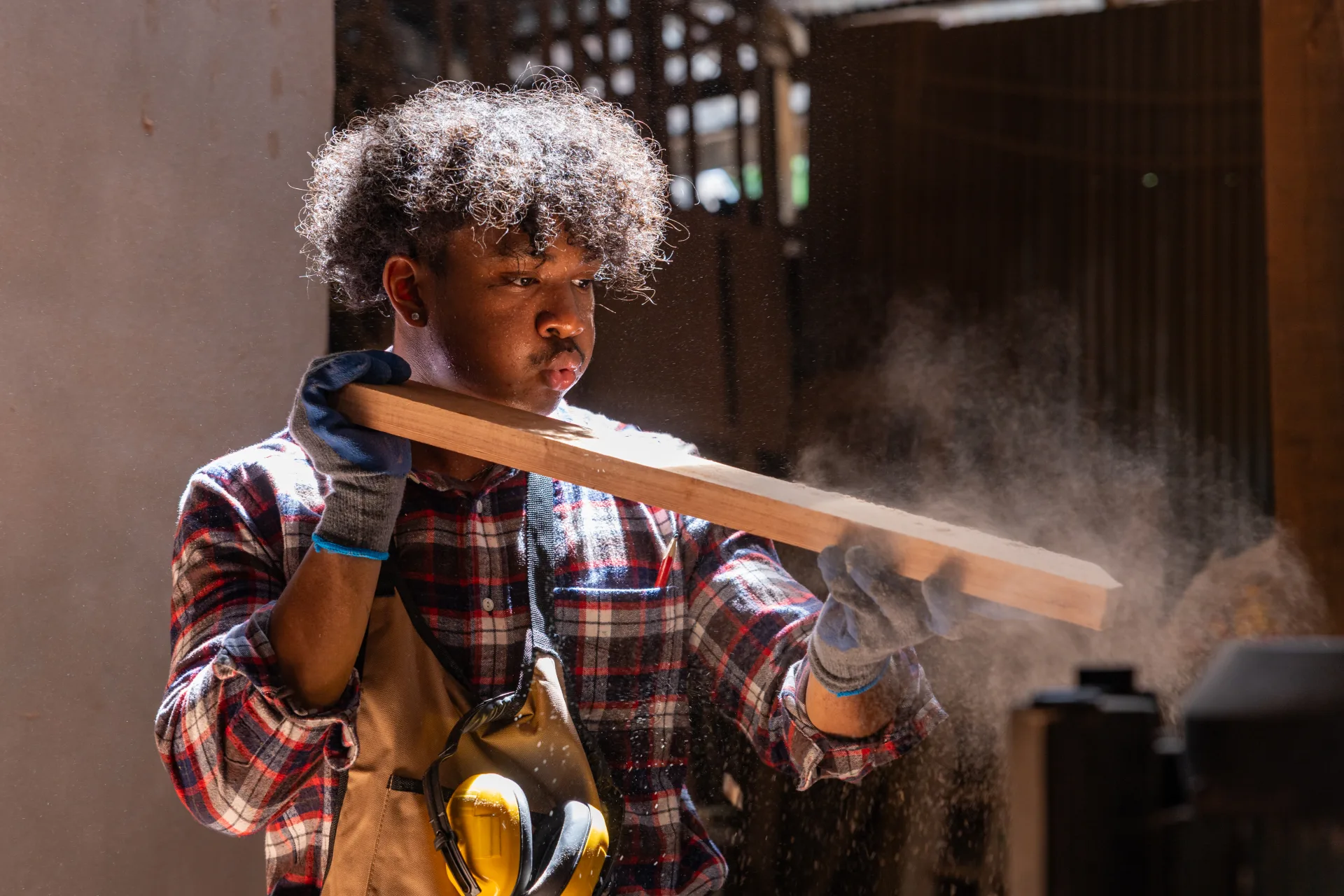
Why buy it when you can build it yourself? That is the idea behind the wooden bench project in our recent workshop video. In a few quick scenes, raw timber becomes a solid, useful piece of furniture through measuring, careful cutting, drilling and assembly. The finished bench matters, but the real result is the set of practical skills built along the way.
For someone new to woodworking, a bench is an excellent place to start. It is achievable without being trivial, useful without being overcomplicated, and substantial enough to give you the satisfaction of saying, “I made that.”
Why a bench works so well as a beginner project
A good first project should teach the fundamentals without burying you in decorative detail. A wooden bench does exactly that. Its form is easy to understand, but every stage still asks you to work accurately and make practical decisions.
- The design is clear. A seat, legs and supports make it easy to see how the parts work together.
- Accuracy has a visible purpose. Straight, consistent cuts help the bench sit level and feel solid.
- The techniques are transferable. The same measuring, cutting, drilling and assembly skills appear in shelves, planters, tables and home repairs.
- The result is genuinely useful. You leave with furniture you can put to work at home, not a throwaway practice piece.
The best beginner projects do more than produce an object. They give you a repeatable process you can take into the next build.
Five practical skills hidden inside one simple build
The bench in the video may look straightforward, but completing it brings together the core stages of a real woodworking project.
- Planning and measuring. Before any timber is cut, you need to understand the dimensions, mark pieces clearly and check them against the plan. Learning to measure twice is less about repeating a slogan and more about avoiding small errors that multiply during assembly.
- Making accurate cuts. The mitre saw shown in the workshop turns longer boards into consistent components. Under a trainer's supervision, beginners learn how to position the timber, keep hands clear, check the cutting line and let the tool do the work.
- Drilling and fixing. A drill is not just for driving a screw as quickly as possible. Good assembly involves choosing the right fixing, keeping the tool straight and bringing pieces together without splitting the wood or stripping the screw head.
- Squaring and assembling. Parts that look correct on their own can still twist or lean when joined. Checking alignment as the frame comes together is what turns a collection of cut boards into stable furniture.
- Sanding and finishing. Removing sharp edges, smoothing surfaces and applying a suitable finish make the difference between a rough workshop build and something ready to use at home.
Power tools are not the first lesson
A responsible beginner woodworking class starts with safe setup, body position and control. The aim is not simply to use a mitre saw or drill; it is to understand when to use each tool and how to produce a clean, repeatable result safely.
What you learn goes far beyond the bench
Once you have worked through a complete build, other projects become easier to understand. A planter box uses the same logic of measuring, cutting and joining. A shelf asks for the same attention to level and secure fixings. Even repairing loose furniture feels less mysterious when you can recognise how its parts were assembled.
Building from new timber and working with an existing piece develop complementary skills. If you want to understand the equipment first, start with our guide to woodworking tools for beginners. If you are more interested in repair, materials and finishes, see what beginners learn in a furniture restoration workshop.
That is why project-based learning builds confidence so quickly. Instead of memorising isolated tool names, you experience the sequence from raw material to finished object. When something does not line up perfectly, a trainer can help you diagnose the cause and correct it, which is often where the most useful learning happens.
Why learn in a workshop instead of starting alone?
Online tutorials are useful for ideas, but they cannot check your grip, spot an unsafe setup or tell you why a joint is pulling out of square. In a structured workshop, you can ask questions at the moment they arise and practise with proper tools and materials before deciding what equipment you need at home.
Small groups matter too. BLD Academy woodworking sessions are capped at 10 people, giving each participant time at the bench and personal feedback from certified trainers. The course is designed for beginners and improvers, so you do not need to arrive knowing the difference between every saw, joint or timber type.
What to look for in a beginner woodworking class in Dubai
- A clearly beginner-friendly programme that starts with tool handling and safety.
- Hands-on bench time rather than a demonstration you only watch.
- A small class with enough trainer support to correct technique early.
- Tools and practice materials included, so you can learn before buying equipment.
- A complete project that covers measuring, cutting, assembly and finishing.
- A recognised provider with experienced trainers and a well-equipped learning space.
BLD Academy is a KHDA-registered training institution in Dubai. Our hands-on woodworking course covers measuring, timber selection, safe tool use, cutting, joinery, assembly and finishing in practical weekend sessions. If you would rather sample several home skills before choosing a longer course, our DIY taster workshops are another easy way to begin.
Build the confidence to make the next thing
The most important part of a first woodworking project is not perfect furniture. It is crossing the gap between wondering whether you could build something and knowing that you can. A wooden bench gives you a manageable challenge, a useful result and a foundation for more ambitious projects around the home.
Ready to move from watching to making? Learn practical woodworking in Dubai with real tools, small groups and certified trainers. Sessions start from 1,250 AED, with tools and practice materials included.
Explore the woodworking course