
What Age Can Children Start Woodworking?
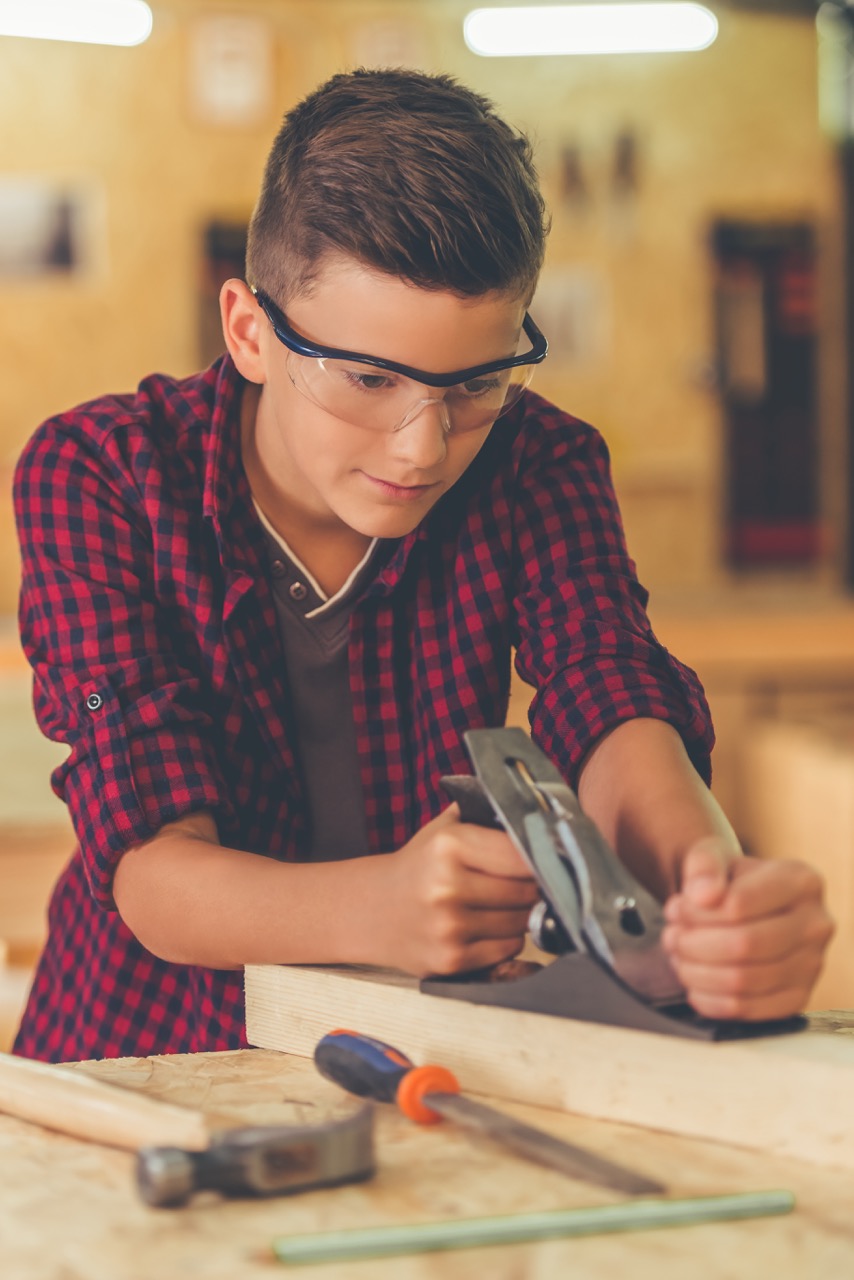
Children can begin learning about wood long before they are ready to control every woodworking tool. Measuring, marking, sanding, assembling and understanding how a project fits together can all be introduced gradually. The right starting point depends less on a universal age and more on the child, the activity, the supervision and the workshop setup.
A safe programme does not simply hand a smaller person an adult tool. It adapts the task, work height, material, pace and level of assistance so the learner can make meaningful decisions without being asked to manage risks beyond their readiness.
Readiness matters more than one age number
Two children of the same age may differ in attention, coordination and comfort around tools. Before choosing an activity, consider whether the child can follow a sequence, stop immediately when asked, keep protective equipment in place and accept guidance when a technique needs correcting.
- Can they listen to and repeat a short safety instruction?
- Can they keep their hands in an agreed safe position?
- Can they focus on one practical task without rushing?
- Can they ask for help rather than forcing a tool or material?
- Are the bench, tool and project sized for their body and reach?
A gradual route into woodworking
Early woodworking should build control and confidence in layers. The examples below are readiness stages rather than strict age bands.
- Explore materials and assembly. Identify grain, compare shapes, sort components, apply glue with help and assemble prepared parts.
- Measure, mark and finish. Use a tape, simple square and pencil, then practise controlled hand sanding and safe finishing on prepared material.
- Use suitable hand tools with direct supervision. Introduce clamps, simple screwdrivers, light hammers or other age-appropriate tools through a clear project.
- Progress to more demanding tools only when ready. Cutting and powered operations require specific instruction, close supervision and a workshop designed to manage the risk.
Supervision should match the tool, not just the age
A child who can sand independently may still need direct one-to-one control around a cutting operation. Workshops should explain which activities children perform themselves, which are shared with an adult and which are completed by the trainer.
What makes a good first woodworking project?
- A clear object the child understands and wants to finish.
- A small number of components and a visible assembly sequence.
- Prepared material that avoids unnecessary defects and difficult cuts.
- Enough real choice to encourage creativity without making the structure confusing.
- A useful result that can be taken home and talked about afterwards.
Simple boxes, signs, planters, shelves or pre-cut furniture projects can teach measuring, alignment, fixing and finishing. The project should be achievable within the session, but not so pre-made that the learner only decorates something built by somebody else.
What parents should look for in a Dubai workshop
- A published minimum age and a clear policy for younger children attending with an adult.
- Small groups and enough trainers or supervising adults for the tools being used.
- A safety briefing that children can understand and demonstrate back.
- Eye protection and any other appropriate protective equipment in suitable sizes.
- Stable benches, good lighting, organised tools and controlled working areas.
- Projects and tools matched to ability rather than one activity forced onto every learner.
How BLD Academy structures family participation
BLD Academy's current DIY taster workshops in Dubai are open to ages 12 and over, with children under 12 welcome when participating with an adult. Activities are trainer-led, tools and safety equipment are provided, and sessions are kept to a maximum of 10 participants.
That format allows families to learn together while keeping the adult actively involved in the younger participant's project. Parents should still share the child's age and practical experience when booking so the team can confirm the current session is suitable.
The benefits go beyond the finished project
- Planning a sequence and checking work before moving forward.
- Using measurements for a visible, practical reason.
- Developing patience when parts need adjustment.
- Learning that mistakes can be diagnosed and corrected safely.
- Building confidence through a real object made with care.
For more ideas beyond woodworking, see our guide to hands-on activities for Dubai school holidays. Adults who want to understand the tools themselves can also read the beginner woodworking tools guide.
Build something together in a supervised workshop designed for adults, teens and families, with real tools and practical projects.
Explore family DIY workshops